Mold Odor Removal in Philadelphia, PA
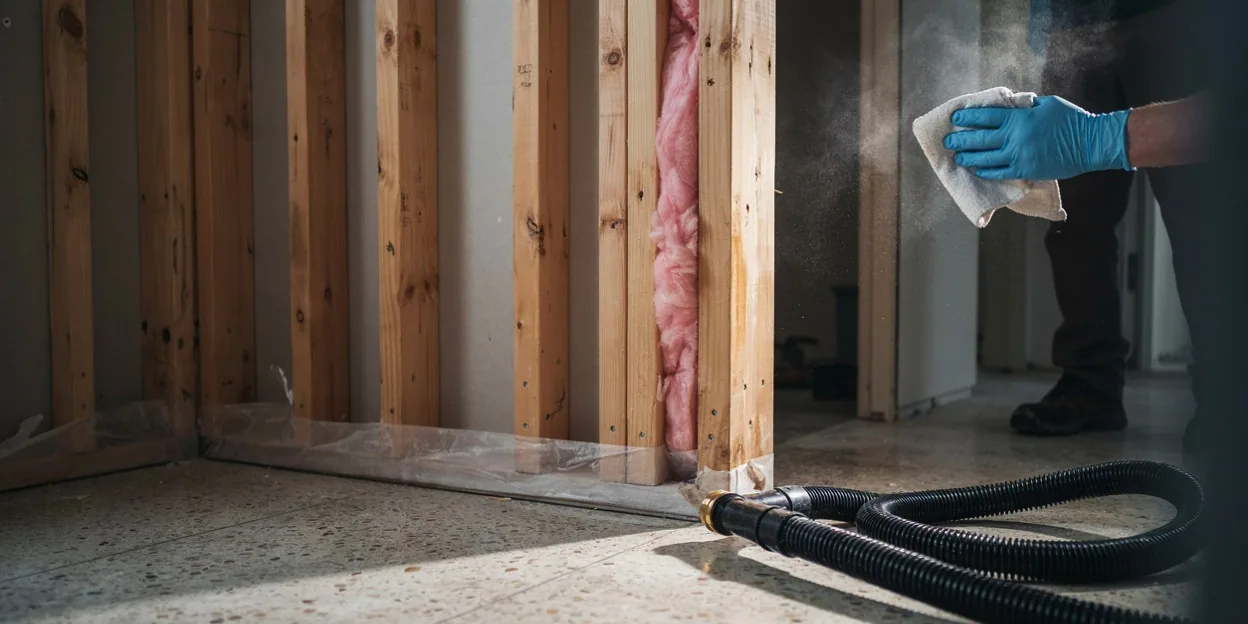
Every July the house smells like a wet basement from the front door to the third floor, and every January it does not. You have looked at every wall and ceiling and found nothing. The cellar is half finished, with a drop ceiling, carpet on the floor, and paneling on the stone walls, and the rear addition sits over a crawl space with a dirt floor you have never been in. This site connects you by phone with an independent local provider who does mold odor removal in Philadelphia and across Philadelphia County.
Following the smell to the wet material instead of covering it
The crew starts where the smell is strongest and works outward with a moisture meter, a thermal camera, and a flashlight. In a Philadelphia rowhouse the wet material is usually in one of four places: behind paneling or drywall on a stone foundation wall, in the joist ends sitting in pockets in that wall, under carpet laid on a concrete floor that sweats, or on the joists over a dirt-floored crawl space under a rear kitchen addition. They lift a corner of the carpet, pull a sheet of paneling, and go into the crawl space.
They also check the air path. A rowhouse works like a chimney: warm air rises up the stair and pulls basement air with it, so a damp cellar is smelled on the third floor. The furnace return in the basement does the same thing faster.
Run a dehumidifier tonight, and do not plug anything in
Set a dehumidifier in the basement and run it continuously until the crew arrives, draining to the floor drain or a sink. Open the crawl space hatch and shine a light in, and photograph what you see; do not go in. Pull back a corner of the basement carpet and look at the pad and the concrete under it.
Do not plug in a scented product, an ozone machine, or a fogger. Each of them hides the smell for a day and does nothing to the material that is making it, and ozone at the levels those machines produce is hard on lungs and on rubber and plastic in the house. If the smell is strongest when the air conditioning runs rather than on humid days in general, the equipment may be the source; see HVAC mold cleaning.
The carpet, the paneling, and whatever is under them
Carpet and pad laid on a sweating concrete floor come out, along with the tack strip. Paneling, drywall, and furring over a damp stone wall come out to the meter line. In a crawl space, debris on the dirt and any insulation stapled between the joists come out, and the joists are cleaned. All of it is bagged inside containment with a HEPA air scrubber running, and the stone, the concrete, and the framing that stay are HEPA vacuumed and wiped down.
Then the space is dried with air movers and a dehumidifier until the materials read dry, and treated. For a crawl space that will keep pulling moisture from the dirt, the crew talks with you about a vapor barrier over the soil and sealing the hatch, which keeps the smell from coming back the next humid summer. If the search turns up visible growth across a large area, the job becomes mold removal or, across several floors, whole-home mold remediation. Putting a finished basement back goes under mold damage repair.
Finished cellars on 1890s stone, and the Philadelphia dew point
Philadelphia summers put the dew point in the 70s for stretches of a week, and a rubble-stone or brick foundation wall below grade stays at ground temperature, well under that. Air touching that wall drops its water on it, and whatever covers the wall soaks it up. Finished basements went into these rowhouses from the 1960s on, with paneling, drop ceilings, and carpet on the slab, and the finish is what grows. The rear kitchen additions on many South Philadelphia and West Philadelphia rowhouses sit over a shallow crawl space with a dirt floor that was never meant to be sealed.
Pennsylvania has no mold license, so the company you call represents its own training. Replacing a finished basement, or adding a drain and a sump where the floor sweats, is home improvement work the contractor registers with the Attorney General to perform, and a sump that ties into the sewer lateral needs a plumbing permit through the Department of Licenses and Inspections. A whole-house dehumidifier is sometimes part of the long-term answer in these houses, but the wall and the crawl space come first.
Calling about a rowhouse smell you cannot find
Have the address, where in the house the smell is strongest, and whether it follows the weather or the air conditioning. Say what the basement walls and floor are covered with and whether there is a crawl space under any part of the house. Call (215) 600-0376.