HVAC Mold Cleaning in Philadelphia, PA
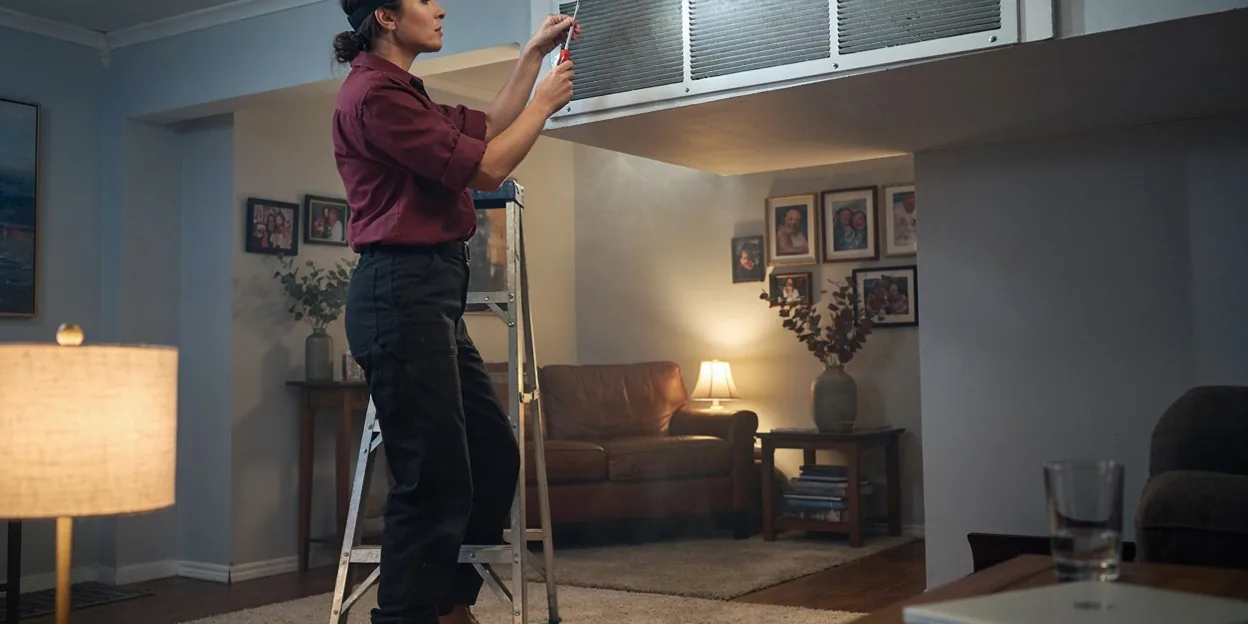
The house smells fine in April. In June, the first day the air conditioning runs for more than an hour, a damp, sour smell comes out of every register on the second floor. The air handler is in the basement of your Mayfair twin, or wedged into a closet on the third floor of a rowhouse that never had ducts until a flipper added them. This site connects you by phone with an independent local provider who does HVAC mold cleaning in Philadelphia and across Philadelphia County.
Finding whether it is the coil, the pan, or the duct run
The crew opens the air handler cabinet first. A Philadelphia summer puts the dew point in the 70s for days at a time, and a coil pulling that much water out of the air fills the drain pan faster than a half-clogged condensate line can empty it. Standing water in the pan, a wet blower housing, and slime in the line are the usual finds. They check the insulation inside the cabinet and the first few feet of supply duct, and they meter the floor or the closet wall around the unit, because a pan that has overflowed has usually wet whatever it sits on.
If the ducts run through an unconditioned attic under a flat roof, they look there too. Flex duct in a 130-degree attic sweats where it is not sealed, and the insulation under it soaks.
Turn the system to fan-off and check under the unit
Set the thermostat to off, not to fan, so the blower stops pushing air across the wet coil into the bedrooms. Look under and around the air handler for a wet floor, a rusted pan, or a drain line that ends in a bucket. Photograph what you find. Do not spray anything into the registers or the return; aerosol products sold for ducts do not reach a wet coil and can damage the fan.
Change the filter if it is wet or dark. If the unit sits in a basement that has taken water, say so when you call, because a flooded air handler is a different job from a sweating one.
Coil and pan cleaned, insulation replaced, the line that failed fixed
The crew cleans the coil and the blower, cleans or replaces the drain pan, and clears or replaces the condensate line and its trap. Cabinet insulation that has grown mold comes out and is replaced with a closed-cell product that does not hold water. Duct runs with growth on the inside are cleaned where the duct is sheet metal and replaced where it is flex or lined fiberboard, because porous lining cannot be cleaned.
If the pan overflowed onto drywall or a closet floor, the wet material comes out under mold removal. If the smell traces to the attic rather than the equipment, see attic mold remediation. If the growth around the unit is on a wet basement wall rather than the unit itself, that is mold odor removal work on the wall, and the crew tells you which one it is before they start.
Retrofit ducts in a city built for radiators
Most Philadelphia rowhouses were built with steam or hot-water radiators and no ductwork, and the central air that is in them now was threaded through closets, soffits, and the attic decades later. The air handler ends up in a basement corner or a third-floor closet with a long condensate run that drains uphill in places, and the ducts cross unconditioned space where they sweat. The 1950s twins in the Northeast and the postwar houses in Bensalem and Upper Darby were built for forced-air heat and got cooling added to the same ducts, with the coil above a furnace in a basement that is damp on its own.
Pennsylvania has no mold license, so the company you call represents its own training. Replacing a coil, a pan, or a run of duct is mechanical work that may need a permit from the Department of Licenses and Inspections, and the provider pulls it. Running a dehumidifier in the basement through the summer keeps the coil from carrying the whole load, and it keeps the stone walls drier too.
Calling about a smell that comes out of the registers
Have the address, where the air handler sits, and whether the smell is strongest when cooling starts or all the time. Say whether the pan has ever overflowed and whether the basement has taken water. Call (215) 600-0376.